So far so good...
“It’s about a guy who falls off a skyscraper. On his way down past each floor, he keeps telling himself, ‘So far so good… so far so good… so far so good.’ But it's not how you fall that matters. It’s how you land.”
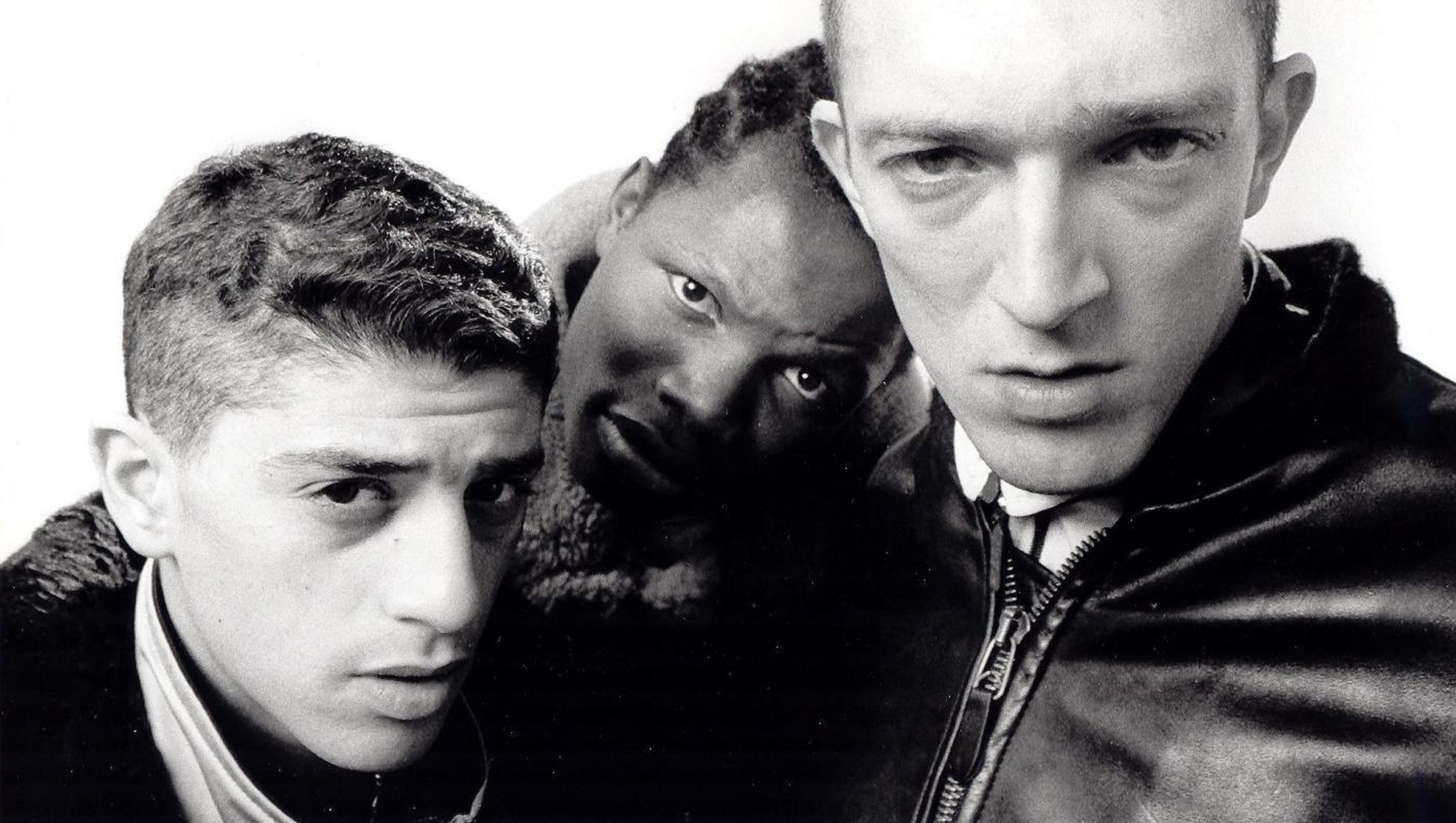
Mathieu Kassovitz’s La Haine begins with this parable, establishing both the tone of the film and its structural metaphor of the illusion of stability during the fall. Set in the Paris banlieues following a riot sparked by the brutal beating of a young man by the police, La Haine follows three young men, Vinz, Hubert, and Saïd, over the course of 24 hours after the unrest. As a Jew, an African, and an Arab, they embody marginalized identities within French society navigating a system shaped by inequality, racial tension, and routine police aggression.
The pacing of the film is deliberately slow, with much of the characters’ time spent wandering the neighborhood, sitting in silence, or passing time aimlessly. This mundanity is intentional, allowing viewers to closely observe the three central characters as tension slowly builds. From the very beginning, Vinz, Hubert, and Saïd are in free fall, but they mistake survival for stability. As the film unfolds, both the characters and the viewer fall into the same false reassurance. Like the man in the parable, they tell themselves, “so far so good.” Yet, this is simply an illusion; the landing remains inevitable.
Each of the protagonists embodies a different strategy for coping with this inevitability, believing they can control the fall. Vinz represents action, responding to his anger with aggression and revenge. After finding a police officer’s lost gun from the riots, he carries it with him, threatening retaliation. The gun becomes a symbol of power, a way for him to believe that acting first can alter his fate.
In contrast, Hubert represents morality. Unlike Vinz, he understands the consequences of violence and rejects it, dreaming of leaving the banlieues behind. He recognizes the threat of the system but believes that distance can protect him from it. By separating himself from violence, he hopes to avoid the fall altogether. Saïd, on the other hand, represents neutrality. Positioned between his two friends, he survives through humor, diffusing tension with jokes. Rather than committing to aggression or moral idealism, he attempts to navigate the fall without directly resisting it.
By the end of the film, each of these strategies proves futile, revealing the harsh reality that no individual strategy can prevent impact when the system itself ensures the fall. After a long night wandering through Paris, Vinz gives up his gun to Hubert, and for a brief moment it seems like their fall may be avoided. However, when Vinz is suddenly shot by a police officer, Hubert, who rejected violence throughout the film, is forced into action and aims the gun at the officer in a tense standoff that ends with a gunshot. The violence is abrupt, yet it feels inevitable.
La Haine begins and ends with Saïd’s eyes closed as a gunshot is heard, forming a cycle that reveals that their stories are not isolated tragedies but part of a continuing pattern. In the final scene, the parable is repeated, and the falling man is replaced by society, broadening the fall from three individuals to society as a whole. The film was never about Vinz, Hubert, and Saïd specifically; they were simply three individuals within a society already in free fall. Their landing does not stop the descent—society remains suspended in that fall, repeating “so far so good” unless the system itself changes.